
Search News
Industry Portal
Popular Tags
Lead Sheet for Radiation Shielding: What Buyers Must Verify Before Installation
Author
Eddy Current/Magnetic NDT
Time
Jul 13, 2026
Pageviews
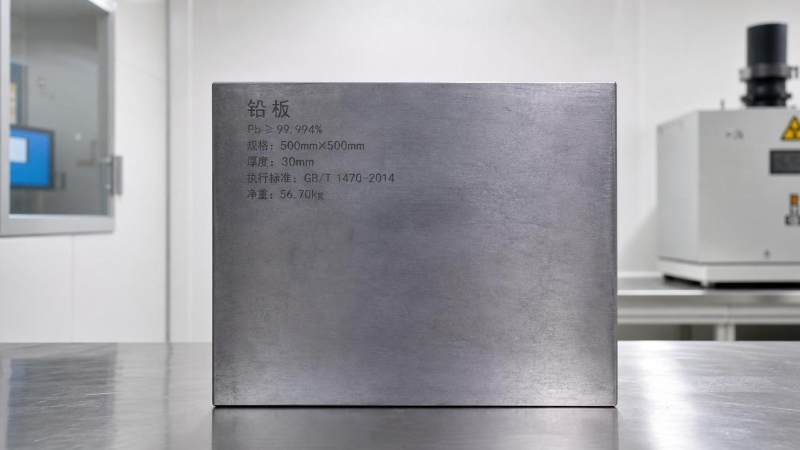
Radiation shielding projects are not ordinary metal purchases. When procurement teams source lead sheet for X-ray rooms, CT rooms, industrial inspection areas, laboratory shielding, or protective partitions, the final result depends on material thickness, coverage design, joint treatment, installation discipline, documentation, and the way the project team verifies shielding performance after construction.
This technical chain is important because shielding failure is rarely caused by one visible issue alone. A sheet may have the right nominal thickness but still create risk if seams are poorly overlapped, fastener points are not treated, wall penetrations are not planned, door frames are misaligned, or the site team cuts material without protecting continuity. For buyers, the real procurement question is not only "what is the price per sheet?" It is whether the material can be specified, delivered, installed, and checked in a way that supports the facility's radiation protection plan.
Lead remains widely used for shielding because of its density, workability, and ability to attenuate ionizing radiation when applied correctly. However, buyers should avoid treating lead products as interchangeable. A hospital imaging room, a dental radiography room, an industrial non-destructive testing booth, and a CT inspection enclosure may all require different engineering conversations. The best purchase decision begins with the radiation source, the room layout, the expected barrier, and the local approval process.
Why Lead Works as a Shielding Material
Lead is dense, relatively formable, and easy to install as sheet or plate over walls, doors, frames, viewing areas, and protective partitions. In shielding design, density matters because radiation attenuation depends on how the material interacts with the energy of the radiation source. A thicker or more suitable barrier can reduce transmission, but the correct thickness is not chosen by guesswork. It should be determined by project design, radiation workload, occupancy around the room, distance, exposure direction, and applicable local safety requirements.
For buyers, this means the product name alone is not enough. The inquiry should define the intended environment: medical imaging, dental imaging, industrial X-ray, industrial CT, security inspection, laboratory shielding, or another controlled exposure area. The procurement team should then work with the project designer, radiation safety officer, contractor, or qualified local professional to confirm the needed thickness and coverage.
Rolled lead barrier material is often used because it can be installed behind surface finishes, bonded to panels, wrapped around frames, or integrated with doors and partitions. Its flexibility helps contractors adapt it to room geometry. Yet that same flexibility can create mistakes if workers leave gaps, folds, cracks, or untreated holes. Technical planning matters as much as material supply.
Thickness Is a Design Decision, Not a Guess
Thickness is usually the first parameter discussed, but it should not be selected only from a supplier catalog. Radiation shielding thickness must correspond to the project conditions. A room with a low workload and limited exposure direction may have a different requirement from a high-use imaging room or industrial inspection enclosure. Adjacent room occupancy also matters. A barrier next to a public corridor, office, control room, or storage area may require different treatment.
Buyers should therefore request the required lead equivalence or sheet thickness from the project design team before placing an order. If a supplier page lists common thickness ranges, those values should be treated as available options rather than automatic solutions. The safest procurement workflow is to confirm the design requirement first, then source the matching material with suitable size, tolerance, and documentation.
Another practical issue is sheet size. Larger sheets can reduce the number of joints, but they may be harder to transport, handle, or install in tight areas. Smaller sheets are easier to move but require more seams. A procurement team should balance sheet size, handling capacity, wall layout, and installer experience.
Technical Factors Buyers Should Confirm
Where Shielding Continuity Can Fail
A technically correct material can still fail if barrier continuity is not protected. Common weak points include sheet seams, wall corners, electrical penetrations, window frames, door jambs, ceiling transitions, floor junctions, ducts, and pipe openings. Every interruption in the barrier should be planned before cutting and fixing begin.
For example, if sheets are installed edge to edge without a suitable overlap strategy, a narrow line of reduced shielding may remain. If a contractor drills through a barrier to install fixtures and does not treat the penetration, the opening can become a weak point. If a lead-lined door is installed without proper frame coordination, the door leaf may be shielded while the perimeter is not. These are construction coordination issues, not merely product issues.
Buyers can reduce this risk by asking how the sheet will be installed and by aligning the material order with the project drawings. Procurement should not be isolated from the design and installation teams. A purchase order that includes the right sheet size, but ignores seam layout and penetration control, still leaves the project exposed to rework.
Documentation and Compliance Communication
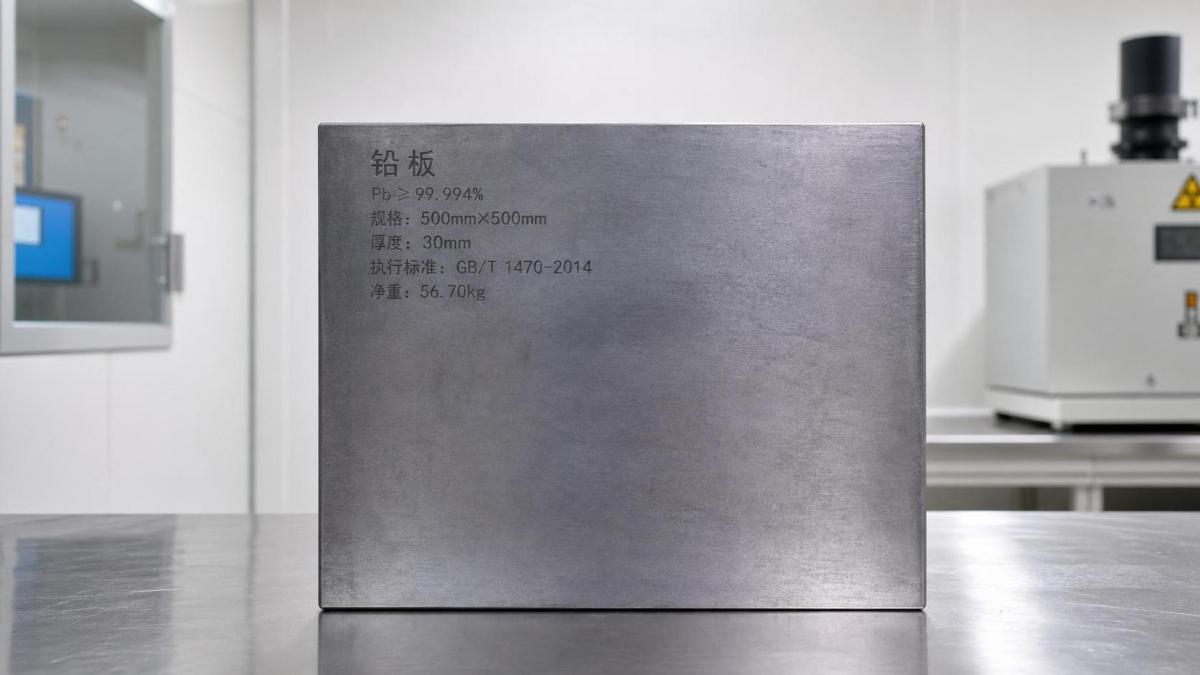
Radiation shielding projects usually operate under local codes, facility rules, inspection requirements, or project-specific approval procedures. The supplier should not be expected to replace the role of a qualified radiation protection designer. However, a supplier can support the procurement process with clear product descriptions, dimensions, packing details, labels, and agreed material documents.
Buyers should clarify what documentation is needed before ordering. This may include commercial documents, product specification, material description, delivery labels, packing records, or other agreed paperwork required by the project owner. If the facility requires specific test reports or local approval documents, those requirements should be stated before production or shipment, not after material arrives.
For international procurement, terminology should be especially clear. Words such as lead plate, radiation shielding sheet, and lead lining material may be used differently by different suppliers and contractors. The order should therefore specify dimensions, thickness, quantity, intended use, and any documentation requirements in writing.
Procurement Checklist for Lead Shielding Material
- Confirm the shielding design requirement before requesting a price.
- Specify thickness, sheet size, tolerance, quantity, and intended room or equipment area.
- Clarify whether the material is for medical imaging, industrial X-ray, industrial CT, laboratory shielding, or another controlled area.
- Coordinate seam overlap, edge treatment, fastener points, corners, and penetrations with the installer.
- Ask for product descriptions, labels, packing details, and agreed documentation before shipment.
- Check whether local approval, inspection, or post-installation radiation survey requirements apply.
- Plan handling carefully because rolled lead panels can be heavy, soft, and vulnerable to deformation if moved roughly.
- Keep procurement, design, installation, and facility safety teams aligned throughout the order.
Storage, Handling, and Installation Discipline
Shielding material handling requires care. The material is heavy and can deform if unsupported. Edges may be damaged during unloading or movement, and flatness can be affected by poor stacking. Buyers should confirm packing and unloading plans before shipment, particularly for large sheets or long-distance transport.
On site, installers should avoid unnecessary cuts, sharp folds, and unplanned holes. If cutting is required, pieces should be measured and placed according to the shielding layout. The finishing layer should not hide unresolved gaps. Once the lead is covered by wallboard, panels, or decorative surfaces, later correction can become expensive and disruptive.
Good installation discipline also includes safety handling. Lead materials should be managed according to local occupational health practices, with attention to clean handling, waste control, and proper disposal of offcuts. These requirements vary by jurisdiction, so buyers should coordinate with local professionals rather than relying on a generic rule.
FAQ
Can buyers choose lead thickness directly from a catalog?
They should not rely on catalog thickness alone. The required thickness should come from the shielding design or qualified local project guidance, based on radiation source, workload, distance, occupancy, and applicable requirements.
Why are seams and penetrations so important?
Radiation shielding depends on continuous coverage. Even if the sheet itself is suitable, gaps at seams, fasteners, frames, ducts, and wall penetrations can weaken the barrier and create rework risk.
Is this shielding material used only in hospitals?
No. It can be used in medical imaging areas, dental radiography rooms, industrial X-ray inspection, industrial CT rooms, laboratory shielding, and other controlled radiation environments, depending on the design.
What documents should buyers request?
The needed documents depend on the project. Buyers may request product description, dimensions, labels, packing information, commercial documents, and any agreed material documentation required by the owner or local approval process.
Final Technical View
Lead shielding procurement should be treated as a technical coordination task. The buyer needs the right material, but also the right thickness decision, sheet layout, seam strategy, handling plan, documentation, and post-installation verification process. When procurement is connected with design and installation from the beginning, shielding projects are less likely to suffer from gaps, rework, unclear responsibility, or delayed approval.
Editorial Review Note
This article is buyer-facing technical guidance for radiation shielding material procurement. It avoids fabricated prices, unsupported performance statistics, invented certifications, and made-up project cases. Final upload should be checked against the destination portal's house style, category rules, and editorial formatting requirements.
Recommended News
- 2026/09/13Ultrasound Testing for Pipelines: Detecting Corrosion and Weld Defects Before FailureUltrasound testing for pipelines detects corrosion, wall loss, and weld defects early—helping teams reduce failure risk and make confident maintenance decisions.
- 2026/09/12Which Metrology Technology Trends Will Reshape In-Process Quality Control?Metrology technology trends are transforming in-process quality control with inline sensing, AI, CT, and closed-loop data—see what drives faster, trusted decisions.
- 2026/09/11Climatic Simulation Chambers: Which Temperature and Humidity Controls Matter Most?Climatic simulation chambers: discover which temperature and humidity controls ensure accurate, traceable test conditions and reliable qualification data.