Search News
Industry Portal
Popular Tags
CBP Origin Checks Slow HPLC/GC Shipments
Author
Quantum Imaging Scientist
Time
Jun 11, 2026
Pageviews
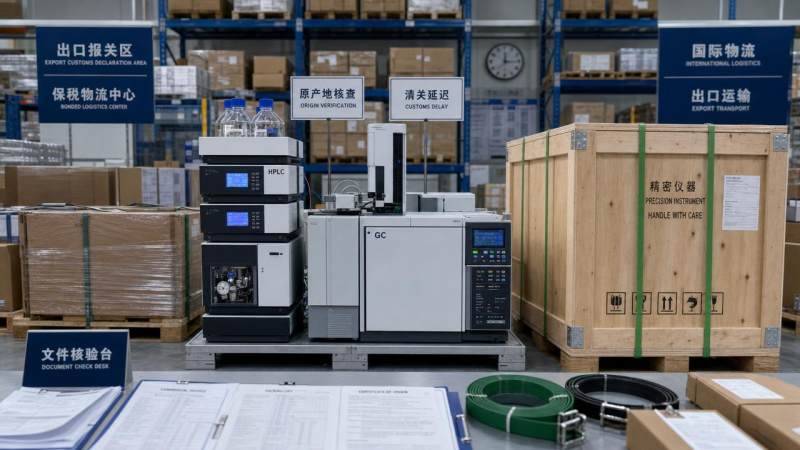
On June 8, 2026, U.S. Customs and Border Protection under the Department of Homeland Security began a targeted authenticity review of origin declarations for imported HPLC and GC systems. The change matters beyond a customs update: it directly affects exporters, buyers, logistics coordination, contract delivery schedules, and compliance documentation for analytical instrument shipments, especially where core modules must match declared manufacturing origin.
What the review now covers
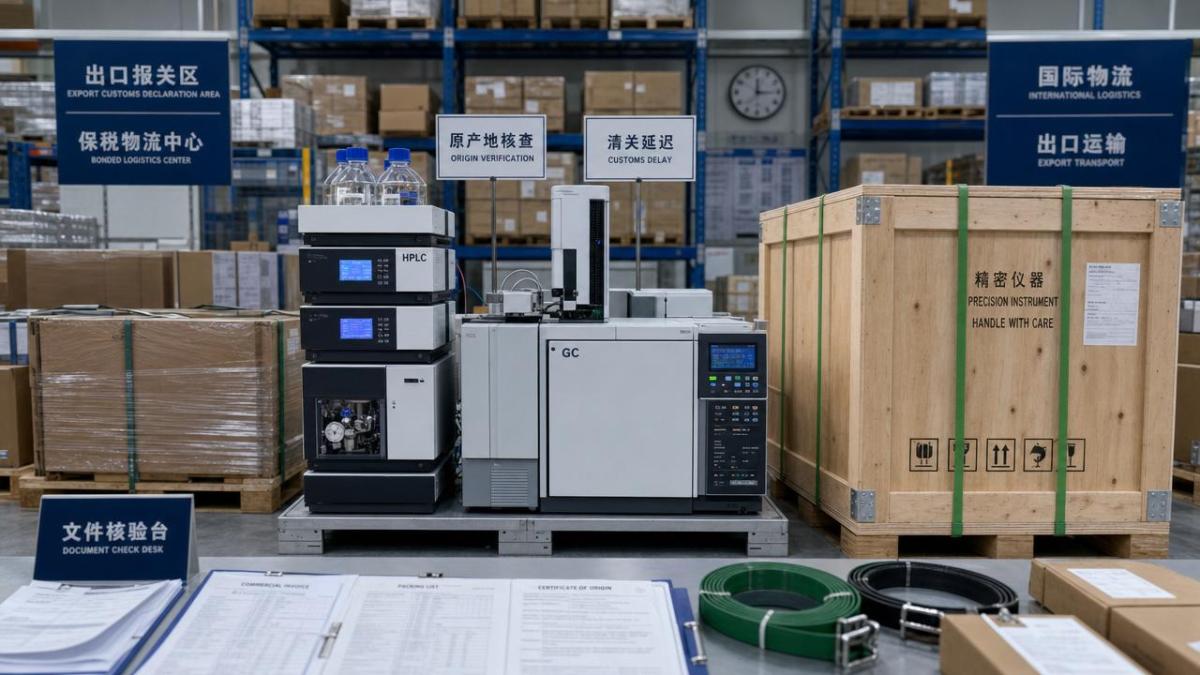
According to the provided event summary, CBP started a “special authenticity review” for the origin of imported precision analytical instruments covering HPLC and GC systems from June 8, 2026. The review focuses on whether the declared origin of key components is consistent with their actual place of manufacture, including high-pressure pumps, detectors, and column temperature-control modules.
The same summary states that several leading Chinese chromatography instrument exporters have confirmed that average customs clearance time has increased from about 5 days to 18–21 days. It also states that some orders have faced delays because of supplementary documentation requests, increasing the risk of contract breach.
Where the pressure is likely to appear first
Export shipments face a higher document burden
From an industry perspective, exporters of HPLC and GC systems may be affected first because the review is aimed at origin authenticity rather than only product entry timing. The immediate pressure point is likely to be document consistency for core components, especially where assembled systems include modules sourced from different manufacturing locations. What deserves closer attention is whether origin statements, parts records, and shipment declarations remain fully aligned across the same order.
Procurement teams may need to reset delivery assumptions
For buyers and procurement teams, the reported increase in clearance time changes the practical delivery window even when the product itself has not changed. The main impact is likely to show up in purchase scheduling, acceptance planning, and contractual milestone management. Observably, companies relying on imported chromatography systems for project commissioning or lab expansion may need to pay closer attention to whether lead times in quotations and contracts still reflect current customs processing conditions.
Supply-chain service providers may see more coordination work
Logistics coordinators, customs support teams, and related supply-chain service providers may be drawn more deeply into pre-shipment review and post-filing supplementation. The business impact is less about transport itself and more about handling origin-related records for critical subsystems, responding to supplementary requests, and helping reduce avoidable filing mismatches that can prolong release.
After-sales and delivery commitments may also come under strain
Where contracts include installation timing, service response windows, or project-linked delivery obligations, delayed customs release can affect more than freight schedules. Analysis shows that after-sales teams and project delivery managers may need to watch whether import timing begins to interfere with customer handover, site planning, or service commitments tied to system arrival.
Practical issues companies should watch now
Check origin records at component level
Analysis shows that the most immediate compliance issue is not a general policy reading but the traceability of origin information for core modules named in the review focus. Companies involved in export, procurement, or import support should closely check whether component-level manufacturing information is internally consistent across declarations, commercial documents, and technical records.
Revisit lead-time language in contracts and quotations
Given the reported shift from roughly 5 days to 18–21 days in customs clearance, businesses should pay close attention to delivery clauses, promised shipment windows, and downstream acceptance milestones. This should be understood as a timing and execution issue first, particularly where delay exposure could turn into contractual disputes if supplementary materials are requested after filing.
Prepare for closer scrutiny of supporting materials
Observably, firms should watch whether existing document packs are sufficient when a shipment includes multiple key modules whose manufacturing origin must match the declared filing position. Where the input does not provide detailed enforcement criteria, it is more appropriate to treat this as a signal to strengthen document readiness rather than assume a settled review standard.
Follow further execution signals before making broad assumptions
What deserves closer attention is whether official wording, review practice, or transaction documents begin to show a more stable enforcement pattern after the initial phase. Because no detailed procedural thresholds are provided in the input, companies should avoid treating the current situation as a fully defined long-term rule framework and instead monitor how it is being applied in practice.
How this development is best understood at this stage
In editorial observation, this development looks less like a theoretical policy statement and more like an execution signal already affecting shipment timing. At the same time, it is not yet possible from the provided information to define the full operating standard behind the review, the duration of the tighter checks, or whether document expectations will become more standardized. For the industry, the key point is that origin compliance for core instrument modules has moved closer to delivery risk, not just customs formality.
Why the market should keep watching
From an industry perspective, the practical meaning of this event is that origin declarations for HPLC and GC systems are now more directly linked to clearance efficiency and contract performance risk. It is more appropriate to understand the development as an implemented enforcement change with immediate operational impact, while still recognizing that the finer points of execution, documentation expectations, and market response require continued observation.
Basis of this article
This article is based on the user-provided news title, event date, and event summary. For events of this type, commonly relevant source categories may include official notices, releases from regulatory authorities, customs or trade administration information, industry association updates, standards-related documents, and reporting by authoritative media. No specific official source link was provided in the input, so further verification remains necessary. What still needs monitoring includes detailed enforcement language, documentation expectations, changes in tender or procurement documents, industry feedback, and how affected companies are implementing compliance and delivery adjustments.
Recommended News
- 2026/09/13Ultrasound Testing for Pipelines: Detecting Corrosion and Weld Defects Before FailureUltrasound testing for pipelines detects corrosion, wall loss, and weld defects early—helping teams reduce failure risk and make confident maintenance decisions.
- 2026/09/12Which Metrology Technology Trends Will Reshape In-Process Quality Control?Metrology technology trends are transforming in-process quality control with inline sensing, AI, CT, and closed-loop data—see what drives faster, trusted decisions.
- 2026/09/11Climatic Simulation Chambers: Which Temperature and Humidity Controls Matter Most?Climatic simulation chambers: discover which temperature and humidity controls ensure accurate, traceable test conditions and reliable qualification data.