
Search News
Industry Portal
Popular Tags
Japan Suspends Tungsten Hexafluoride Shutdown Plan
Author
Quantum Imaging Scientist
Time
Jun 19, 2026
Pageviews
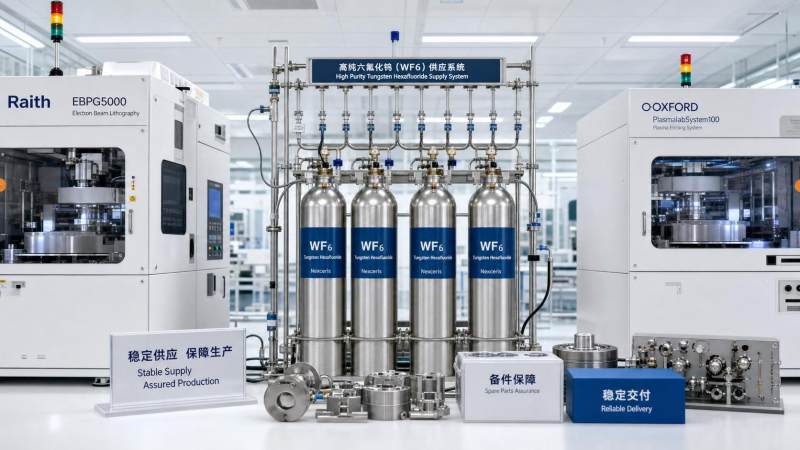
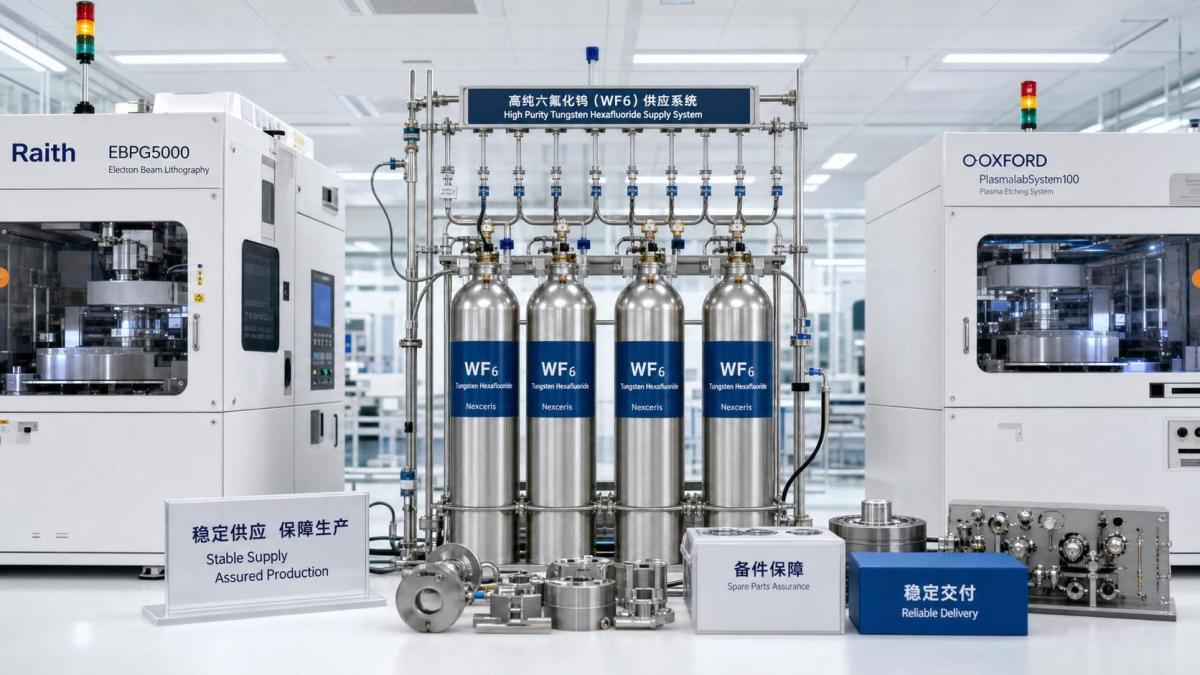
On June 19, 2026, a planned permanent halt in Japanese tungsten hexafluoride production scheduled for July 1 was put on hold, easing an immediate supply-side execution risk for semiconductor testing and laboratory operations. Because this material is used in electron beam lithography, SEM/TEM sample preparation, and plasma etching test systems, the change is relevant not only to materials procurement but also to delivery planning, spare-parts availability, and compliance review across semiconductor labs, Fab facilities, and related equipment support chains.
A production decision that no longer points to an immediate stop
The confirmed facts are limited but commercially significant. Kanto Denka and CGC, which had planned to permanently stop tungsten hexafluoride production on July 1, 2026, announced on June 19 that the shutdown decision would be suspended. Tungsten hexafluoride is identified in the provided information as a key consumable for electron beam lithography, SEM/TEM sample preparation, and plasma etching test systems. The stated effect of this reversal is a reduction in spare-parts delivery risk for high-resolution electron microscopy and process validation equipment used by semiconductor laboratories and Fab plants worldwide.
Where the immediate pressure eases across the chain
Procurement teams in labs and Fab operations
From an industry perspective, these buyers are directly affected because the earlier shutdown plan would have influenced near-term sourcing assumptions for critical consumables tied to testing and validation equipment. What deserves closer attention is whether current purchase planning, internal approval files, and supplier communication records still reflect an imminent discontinuation scenario or now need revision to match the suspended decision.
Equipment service and spare-parts support functions
After-sales teams and service providers may see temporary relief in delivery coordination pressure, especially where maintenance, sample preparation capability, or tool uptime depends on continued access to this material. Analysis shows that the practical issue is not only stock availability but also whether service documentation, replacement planning, and customer delivery commitments were previously built around a hard stop date that now requires rechecking.
Supply-chain and trade-facing intermediaries
Distributors, sourcing agents, and other supply-chain service providers may need to reassess how they present availability, lead times, and fulfillment risk to customers. Observably, the key business impact lies in quotation validity, procurement timing, and shipment expectations rather than in any confirmed new trade rule. Companies in these roles should pay attention to whether contract language, technical attachments, or delivery notices still rely on the now-suspended shutdown timetable.
What companies should verify now
Check whether compliance files still assume discontinuation
Analysis shows that internal compliance and supplier-review materials may still be based on the original plan for permanent production cessation. Companies should therefore verify whether technical files, approved vendor records, and procurement justifications need to be updated so that internal documentation does not lag behind the latest announced position.
Track any further formal wording or execution guidance
The provided information confirms a suspension of the shutdown decision, but it does not provide detailed execution terms. It is more appropriate to understand this as a development that reduces immediate pressure, while leaving room for further monitoring of formal wording, implementation scope, and any later clarification that could affect purchasing or delivery decisions.
Revisit delivery commitments and tender materials
Companies involved in equipment supply, maintenance support, or laboratory services should review whether bid documents, customer schedules, or spare-parts commitments were drafted under the assumption of a July 1 permanent stop. Where those assumptions appear in technical documentation or delivery planning, cautious revision may be necessary to avoid mismatch between current supply expectations and commercial commitments.
Keep traceability and quality communication aligned
For businesses handling sensitive semiconductor process support, communication around material status should remain consistent across sourcing, quality, and service teams. Observably, this is less about announcing a resolved supply picture and more about making sure traceability records, customer notices, and procurement communications reflect the latest confirmed position without overstating certainty.
Why this looks more like an execution signal than a settled outcome
Analysis shows that this development is best read as a pause in an anticipated supply disruption rather than as a fully settled long-term rule change. The industry relevance comes from the fact that a previously announced production exit had already created a practical expectation of tighter supply risk around high-resolution microscopy and process verification equipment support. Because no further implementation detail is provided here, the market still needs to watch how this suspended decision is reflected in procurement practice, supplier communication, and downstream delivery behavior.
How this update is best understood for now
The most balanced reading is that the immediate supply-chain strain linked to the planned tungsten hexafluoride shutdown has eased, especially for semiconductor labs and Fab-related testing functions that depend on the material. At the same time, it would be premature to treat the situation as a fully resolved long-term supply outcome. It is more appropriate to understand this update as a meaningful short-term execution signal that reduces delivery risk, while still requiring close observation of follow-up statements and market response.
Basis of this article and what still needs verification
This article is generated from the user-provided news title, event date, and event summary. For developments of this kind, commonly relevant source types may include company announcements, regulatory releases, customs or trade authority information, industry association updates, standards documentation, and reporting by established media outlets. No specific official source link was provided in the input, so the underlying announcement path still requires further verification. Observably, the points that still merit continued monitoring include any further formal clarification, certification or compliance interpretation, changes in tender documentation, industry feedback, and how companies ultimately execute procurement and delivery decisions.
Recommended News
- 2026/09/18How to Select Portable NDT Equipment for Field Weld Inspection and Tight-Access SitesPortable NDT testing equipment selection guide for field weld inspection: compare access, coverage, ruggedness, data traceability, and reliable results.
- 2026/09/17Metrology Technology Calibration: Building Traceable Measurements for ISO AuditsMetrology technology calibration for ISO audits: build traceable measurements, evaluate uncertainty, control intervals, and strengthen audit-ready decisions.
- 2026/09/16How to Qualify a Pharmaceutical Testing Supplier for GMP Release TestingPharmaceutical testing supplier qualification for GMP release testing: assess quality systems, method transfer, data integrity, capacity, and total cost to protect batch release timelines.