
Search News
Industry Portal
Popular Tags
SEM vs TEM: Which Delivers Better R&D Imaging in 2026?
Author
Quantum Imaging Scientist
Time
May 26, 2026
Pageviews
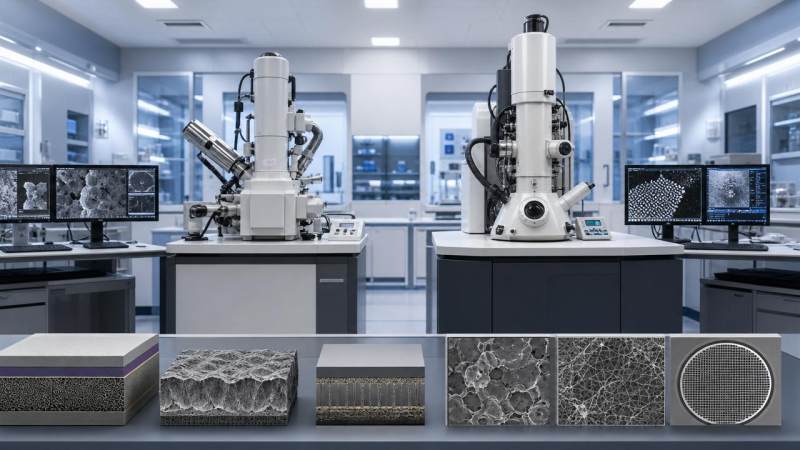
In 2026, choosing between SEM and TEM is no longer just a question of magnification—it is a strategic R&D decision tied to resolution, sample preparation, throughput, and cost. For technical evaluators working in electron microscopy, understanding which platform delivers better imaging for materials, semiconductors, or life science workflows is essential. This guide compares SEM and TEM from a practical, decision-making perspective to help identify the best fit for advanced research demands.
For B2B buyers and laboratory assessment teams, the real issue is rarely “which instrument is more powerful” in isolation. The better question is which platform aligns with the target sample, failure-analysis depth, operator skill, facility constraints, and expected return within a 3-to-7-year R&D roadmap.
Within advanced electron microscopy programs, SEM and TEM often serve complementary roles. Yet budget cycles, lab space, uptime targets, and staffing levels usually force a primary investment decision. That makes a structured comparison critical for technical evaluators who must balance image quality with operational practicality.
How SEM and TEM Differ in 2026 R&D Imaging Priorities
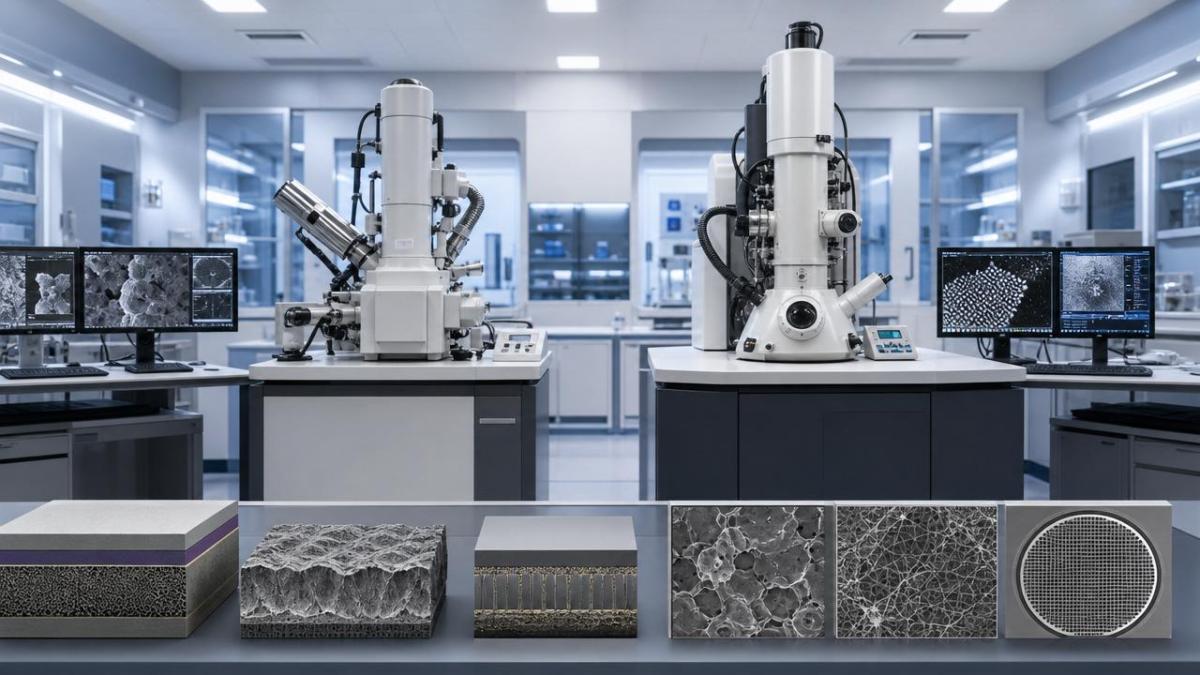
Scanning Electron Microscopy and Transmission Electron Microscopy both sit at the core of modern electron microscopy, but they answer different R&D questions. SEM scans a focused electron beam across a sample surface, while TEM transmits electrons through an ultra-thin specimen, revealing internal structure at much finer scales.
In practical terms, SEM is usually favored for topography, fracture surfaces, particle morphology, contamination checks, and cross-sectional inspection. TEM is typically selected for lattice imaging, nanoscale interfaces, crystallographic defects, and sub-10 nm internal features that cannot be resolved reliably by conventional surface imaging alone.
Resolution versus usability
A key reason this debate remains active in 2026 is that resolution alone does not define imaging value. A modern field-emission SEM may deliver resolution in the 1–2 nm range under optimized conditions, with some systems going below 1 nm. TEM, by contrast, can push toward sub-angstrom or near-atomic-scale imaging in high-performance configurations.
However, achieving that higher TEM resolution often requires thinner samples, stricter vibration control, more advanced operators, and longer preparation time. For labs managing 20 to 50 samples per week, throughput can outweigh peak resolution, especially in industrial failure analysis or routine materials screening.
What technical evaluators actually compare
When technical evaluation teams review electron microscopy platforms, they normally compare at least 6 decision points: spatial resolution, sample preparation burden, throughput, analytical add-ons, total cost of ownership, and fit with existing workflows such as FIB, EDS, EBSD, cryo preparation, or contamination control.
- SEM often supports faster routine imaging and easier operator onboarding.
- TEM supports deeper nanoscale and crystallographic insight for high-value research questions.
- SEM generally tolerates a wider range of sample sizes and geometries.
- TEM usually requires thinner specimens, commonly below 100 nm for many applications.
The table below summarizes the decision logic most often used by R&D procurement and instrument review committees when comparing SEM and TEM for advanced imaging programs.
The most important takeaway is that TEM wins on ultimate nanoscale detail, but SEM often wins on usability, speed, and broader lab access. In 2026, “better” in electron microscopy increasingly means better aligned to the intended R&D question, not simply more magnification.
Application-Based Comparison for Materials, Semiconductors, and Life Science
Technical evaluators rarely buy electron microscopy systems for abstract capability. They buy for application fit. In cross-industry R&D environments, the strongest SEM versus TEM decision usually emerges when use cases are mapped across materials characterization, semiconductor process control, and life science sample analysis.
Materials science and metallurgy
For metals, ceramics, coatings, composites, and additive-manufactured parts, SEM is commonly the first-line tool. It can inspect pore distribution, fracture surfaces, grain-boundary contrast, wear scars, and inclusion morphology with relatively fast turnaround, often within the same day after polishing or fracture sampling.
TEM becomes valuable when the research target shifts to precipitate analysis, dislocation characterization, phase interfaces, or nanoscale oxide layers. If a lab is studying fatigue crack initiation mechanisms or diffusion zones below 50 nm, TEM often provides evidence that SEM cannot resolve conclusively.
Typical fit in mechanical and destructive testing workflows
In labs connected to tensile, fatigue, or fracture mechanics programs, SEM is usually integrated more directly because it pairs well with failed-part analysis. After a 106-cycle fatigue test or a high-load tensile break, SEM can document dimples, cleavage, secondary cracking, and corrosion-assisted failure signatures with efficient sample transfer.
Semiconductor and microelectronics R&D
In semiconductor development, both platforms are critical, but their roles differ sharply. SEM is widely used for CD measurement support, defect review, package inspection, and process development at high throughput. It also integrates more smoothly with FIB workflows for cross-sectioning and quick process debugging.
TEM is often the decisive tool when node scaling, interface engineering, and nanosheet or gate-stack characterization demand atomic or near-atomic insight. For example, ultra-thin dielectric layers, interfacial contamination, and lattice strain interpretation often require TEM-based imaging and diffraction rather than SEM alone.
Life science and biological workflows
For biological research, SEM is effective for cell surface morphology, scaffold interaction, biofilm visualization, and tissue surface detail. It is especially useful when the main objective is to compare shape, coverage, or surface texture across 10, 20, or 100 samples in a controlled study.
TEM is preferred for intracellular ultrastructure, viral architecture, organelle membranes, and fine structural relationships inside thin sections. In advanced life science R&D, including cryogenic workflows, TEM provides the internal detail needed to validate mechanism-level hypotheses that surface imaging cannot answer.
The comparison below helps technical evaluators match platform choice to the most common application scenarios across multidisciplinary laboratories.
For many laboratories, the pattern is consistent: SEM is the workhorse for broad screening and industrial problem solving, while TEM is the precision instrument for targeted nanoscale questions. If the lab must support multiple departments with uneven sample types, SEM often delivers wider day-to-day utilization.
Cost, Throughput, and Infrastructure: What Shapes the Better Investment
From a procurement standpoint, electron microscopy decisions often fail when teams focus only on acquisition price. In reality, the better investment depends on 5 operating layers: preparation workflow, utility requirements, service model, staffing burden, and expected annual sample volume.
Sample preparation time and workflow drag
SEM preparation is frequently measured in minutes to a few hours, depending on coating, drying, mounting, or polishing. TEM preparation can extend from several hours to multiple days when ultramicrotomy, ion milling, FIB lamella preparation, staining, or cryogenic transfer are involved.
That preparation burden matters because it affects effective throughput more than scan time alone. A TEM may produce exceptional data in 30 minutes, but if preparation takes 8 hours and requires a specialist, the full cost per insight rises quickly.
Facility and staffing requirements
Advanced TEM installations typically demand tighter vibration, electromagnetic, and temperature control than SEM. A fluctuation of even 1–2°C or poor site isolation can influence image stability in high-resolution work. SEM installations are not casual, but they are usually more forgiving and faster to commission.
- Check room vibration and electromagnetic noise before final specification.
- Estimate operator training time over the first 3–6 months.
- Include downtime risk and service response in annual cost modeling.
- Map sample-prep dependencies, including FIB, ultramicrotomy, or coating tools.
Total cost of ownership and utilization rate
For technical evaluators, the most useful metric is not instrument prestige but cost per usable answer. If an SEM supports 70% to 80% of weekly imaging demand, it may generate stronger utilization than a TEM that answers only 10% to 20% of questions, even if the latter offers higher scientific depth.
TEM becomes a stronger investment when the organization’s success depends on nanoscale proof: advanced battery interfaces, semiconductor node validation, catalyst nanoparticles, viral structure studies, or high-value publication pipelines. In these cases, lower throughput may still produce higher strategic return.
A Practical Selection Framework for Technical Evaluators
A structured buying process reduces mismatches between instrument capability and real laboratory demand. In electron microscopy, the best evaluations are usually completed in 4 stages: use-case mapping, sample audit, infrastructure review, and vendor demonstration with actual specimens.
Step 1: Define the dominant imaging question
Start by identifying whether the lab mainly needs surface information or internal nanoscale structure. If at least 60% of requested tasks involve morphology, contamination review, fracture evidence, or routine documentation, SEM usually deserves priority. If internal interfaces and atomic-scale relationships drive critical decisions, TEM moves to the front.
Step 2: Audit sample mix and preparation capability
Review the last 6 to 12 months of sample types. Note conductive versus non-conductive materials, fragile biological specimens, multilayer devices, powders, and cross-sections. Then confirm whether the organization already has coating, polishing, ultramicrotomy, cryo handling, or FIB support.
Common evaluation mistake
A common procurement error is selecting TEM based on resolution targets without budgeting for the preparation ecosystem. In practice, a high-end TEM without reliable lamella preparation, contamination control, or trained staff may underperform a well-matched SEM program in the first 12 to 24 months.
Step 3: Validate vendor workflow, not just image brochures
Ask vendors to image your actual samples under realistic conditions. A strong evaluation should include at least 3 sample categories, repeat imaging across 2 operators if possible, and documentation of preparation steps, vacuum behavior, charging issues, drift, and analysis time.
This is especially important for cross-industry laboratories like those tracked by STIS, where materials, industrial reliability, and life science workflows can coexist. A platform that performs well only in ideal demonstrations may not sustain mixed-use R&D pressure.
Step 4: Build the decision around strategic fit
The best imaging platform in 2026 is the one that supports measurable outcomes: faster root-cause analysis, better semiconductor process visibility, higher confidence in nanoscale materials research, or stronger biological ultrastructure interpretation. Technical evaluators should score each option against 4 weighted areas: imaging need, throughput need, prep burden, and expansion path.
Final Decision: Which Delivers Better R&D Imaging in 2026?
If the benchmark is ultimate resolution and internal nanoscale detail, TEM delivers better R&D imaging. If the benchmark is speed, flexibility, lower preparation burden, and broader daily utility, SEM delivers better operational value. For many technical evaluators, the decision is not SEM versus TEM in theory, but SEM first versus TEM first in a phased roadmap.
Organizations working across materials science, semiconductor analysis, industrial failure investigation, and life science research often gain the most by matching electron microscopy investment to the dominant evidence gap in their workflow. That is where disciplined assessment, rather than headline resolution, creates the strongest return.
If you are evaluating SEM, TEM, or a staged electron microscopy strategy for your lab, STIS can help you compare workflows, preparation demands, and instrument fit from a practical R&D perspective. Contact us to discuss your imaging objectives, request a tailored evaluation framework, or explore broader scientific instrument solutions built around precision, repeatability, and long-term research value.
Recommended News
- 2026/06/23RCEP Upgrade Brings Zero-Tariff Clearance for Testers in VietnamRCEP Upgrade Brings Zero-Tariff Clearance for Testers in Vietnam. Learn how Form EV, faster customs release, and lower costs can reshape shipment planning and buyer lead times.
- 2026/06/23FDA Tightens Audit Trail Rules for Ultrapure Water SystemsFDA Tightens Audit Trail Rules for Ultrapure Water Systems: learn what the 2026 21 CFR Part 11 update means for GMP exporters, RO/EDI traceability, FDA access, and urgent compliance before Oct 1, 2026.
- 2026/06/23EU Sets CBAM Carbon Verification Rules for Industrial CT and X-Ray EquipmentEU Sets CBAM Carbon Verification Rules for Industrial CT and X-Ray Equipment. Learn key compliance deadlines, carbon reporting duties, and export risks for EU shipments.